

Are butter cookies vegan? In most cases, no. Traditional butter cookies contain butter, which is made from milk and is therefore a dairy ingredient. Some recipes also contain eggs, milk powder, whey or other animal-derived ingredients.
That does not mean vegan butter-style cookies do not exist. It simply means the word butter is an important clue, not a complete answer. The safest way to decide whether any cookie suits a vegan diet is to read its current ingredient list and allergen statement.
Quick answer: Most traditional butter cookies are not vegan because they contain dairy butter. Lowrey Butter Cookies are also not vegan because they are made with New Zealand cultured butter.
Why Are Most Butter Cookies Not Vegan?
A vegan diet excludes ingredients derived from animals. This includes meat and fish, but it also includes dairy products such as milk, cream and butter. Because butter is a defining ingredient in a traditional butter cookie, most classic recipes are not vegan.
Depending on the recipe, a butter cookie may also contain other non-vegan ingredients, including:
- Eggs, sometimes used for structure, colour or richness
- Milk powder or skim milk powder
- Whey, a milk-derived ingredient
- Casein or caseinates, proteins derived from milk
- Honey, which many vegans avoid
- Milk chocolate, which normally contains dairy
A product name alone is not enough to confirm suitability. Recipes vary between brands, flavours and countries, and manufacturers can update them over time.
Are All Butter Cookies Non-Vegan?
No. Vegan versions can be made by replacing dairy butter and any other animal-derived ingredients with plant-based alternatives. Depending on the recipe, these may include vegan baking blocks, plant-based margarine, coconut oil or other vegetable fats.
The flavour and texture of a vegan cookie depend on the complete recipe and baking method. Some are designed to resemble traditional butter cookies, while others have their own distinct style. The important point is that a product should be clearly labelled and its full ingredient list should support the vegan claim.
Ingredients to Check on a Butter Cookie Label
| Ingredient or wording | Usually vegan? | What to check |
|---|---|---|
| Butter, milk, cream, whey or casein | No | These are dairy ingredients. |
| Egg or egg powder | No | Eggs are animal-derived. |
| Honey | Generally no | Most vegan standards exclude honey. |
| Plant-based margarine or vegan baking block | It depends | Check the full ingredients for milk derivatives or other animal-derived additives. |
| Chocolate, flavourings or emulsifiers | It depends | Their source and formulation can vary. |
Are Lowrey Butter Cookies Vegan?
No. Lowrey Butter Cookies are not vegan because they contain New Zealand cultured butter, a dairy ingredient.
For example, the current ingredient list for Lowrey Original Butter Cookies lists 42% New Zealand cultured butter, together with wheat flour, maize starch, icing sugar and salt. The declared allergens include milk and wheat.
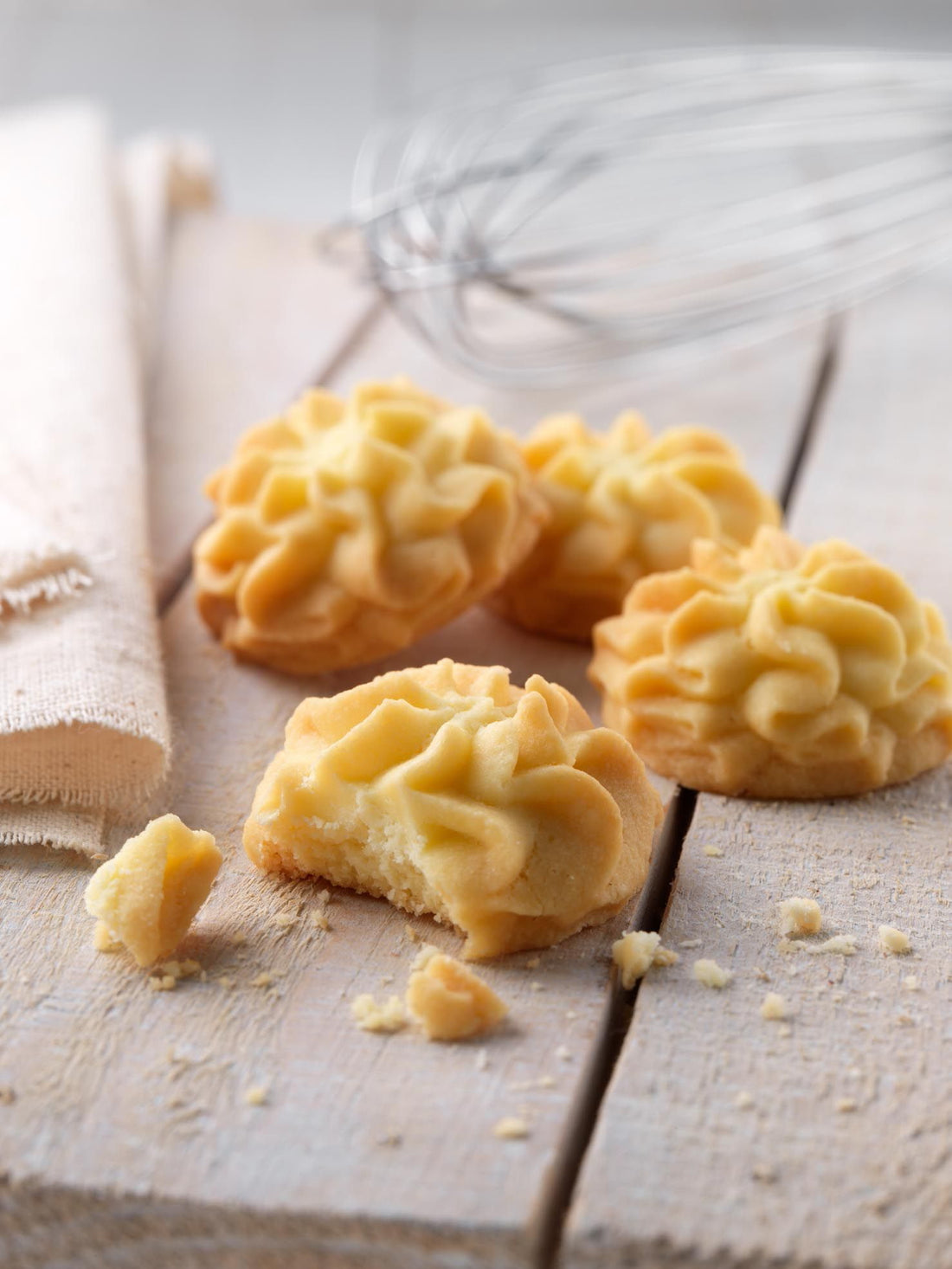
The cultured butter helps create Lowrey's rich buttery aroma and delicate, very fragile, melt-in-the-mouth texture. These cookies are not intended to be hard or crunchy. They are handcrafted in New Zealand in small batches rather than made through large-scale continuous production.
The current Original recipe does not list egg as an ingredient. However, flavours and recipes can differ, and product information may change. Always read the latest packaging before eating or gifting the cookies, especially when an allergy or strict dietary requirement is involved.
You can view the current range in the Lowrey Butter Cookies collection.
Vegan, Vegetarian and Dairy-Free Do Not Mean the Same Thing
These terms are often confused, but they describe different dietary requirements:
- Vegan: excludes dairy, eggs and other animal-derived ingredients.
- Lacto-vegetarian: may include dairy but excludes meat, fish and eggs.
- Dairy-free: excludes milk-derived ingredients, but does not automatically mean vegan because the product could still contain egg, honey or another animal-derived ingredient.
- Egg-free: means no egg is included, but the product may still contain dairy and therefore may not be vegan.
Because Lowrey Butter Cookies contain dairy butter but the current recipes are made without egg, they are described as lacto-vegetarian rather than vegan. For a wider explanation of dietary categories, ingredients and certification, read our guide to whether butter cookies are halal or vegetarian.
Is Cultured Butter Vegan?
No. Cultured butter is still dairy butter. It is made from cream that has been cultured before churning, so the culturing process can influence flavour, but it does not change the ingredient from dairy to plant-based.
If you would like to understand why bakers choose it, see our guide to cultured butter versus regular butter in cookies.
How to Check Whether a Cookie Is Vegan
- Read the full ingredient list. Look for butter, milk, cream, whey, casein, egg, honey and other animal-derived ingredients.
- Read the allergen statement. Milk and egg are commonly highlighted, making them easier to identify.
- Look for a clear vegan claim or certification. This can provide additional assurance, but the latest package remains important.
- Do not rely only on “dairy-free” or “plant-based”. Check whether other animal-derived ingredients are present.
- Check each flavour separately. A range may contain several recipes with different ingredients and allergens.
- Review the package again when you repurchase. Formulations and manufacturing information can change.
A “may contain milk” statement usually warns about possible cross-contact rather than naming milk as an intentional ingredient. Individual vegans may make different choices about precautionary allergen statements. For a milk allergy, follow the product's allergen information and seek appropriate professional advice rather than relying on a vegan label alone.
Frequently Asked Questions
Are butter cookies vegan?
Most traditional butter cookies are not vegan because they contain dairy butter. Some recipes also contain egg, milk powder, whey or other animal-derived ingredients.
Are Lowrey Butter Cookies vegan?
No. Lowrey Butter Cookies contain New Zealand cultured butter, so they are not vegan.
Do Lowrey Butter Cookies contain eggs?
The current ingredient list for Lowrey Original Butter Cookies does not include egg. Other flavours should be checked individually, and the latest product packaging should always be treated as the most accurate source.
Are Lowrey Butter Cookies vegetarian?
They are suitable for lacto-vegetarian diets because they contain dairy but are made without egg. People with specific dietary or allergen requirements should check the latest packaging for the chosen flavour.
Is cultured butter vegan?
No. Cultured butter is made from dairy cream, so it is not vegan.
Does dairy-free mean vegan?
Not necessarily. A dairy-free cookie may still contain egg, honey or another animal-derived ingredient. Check the complete ingredient list.
Can butter-style cookies be made without dairy?
Yes. Vegan recipes can use plant-based fats instead of dairy butter, provided the remaining ingredients are also vegan.
Does “may contain milk” mean milk is an ingredient?
Not usually. It generally indicates a risk of accidental cross-contact during manufacturing. People with milk allergies should follow the allergen warning and obtain appropriate professional advice.
Looking for Traditional Butter Cookies?
Explore Lowrey Butter Cookies, handcrafted in New Zealand with New Zealand cultured butter for a delicate, melt-in-the-mouth texture.
Are butter cookies vegan? Most traditional versions are not, and Lowrey Butter Cookies are not vegan because they contain New Zealand cultured butter. Always check the latest packaging when choosing for a specific diet or allergy.

