

Butter is a familiar ingredient, but the words used on butter packaging can still be confusing. Salted or unsalted? Sweet-cream or cultured? Grass-fed or conventional? And does one type automatically make a better cookie?
This practical guide explains what butter is, how it is made, what its main components do in baking and how to choose, soften and store it. It also clarifies why terms such as cultured and grass-fed describe different things.
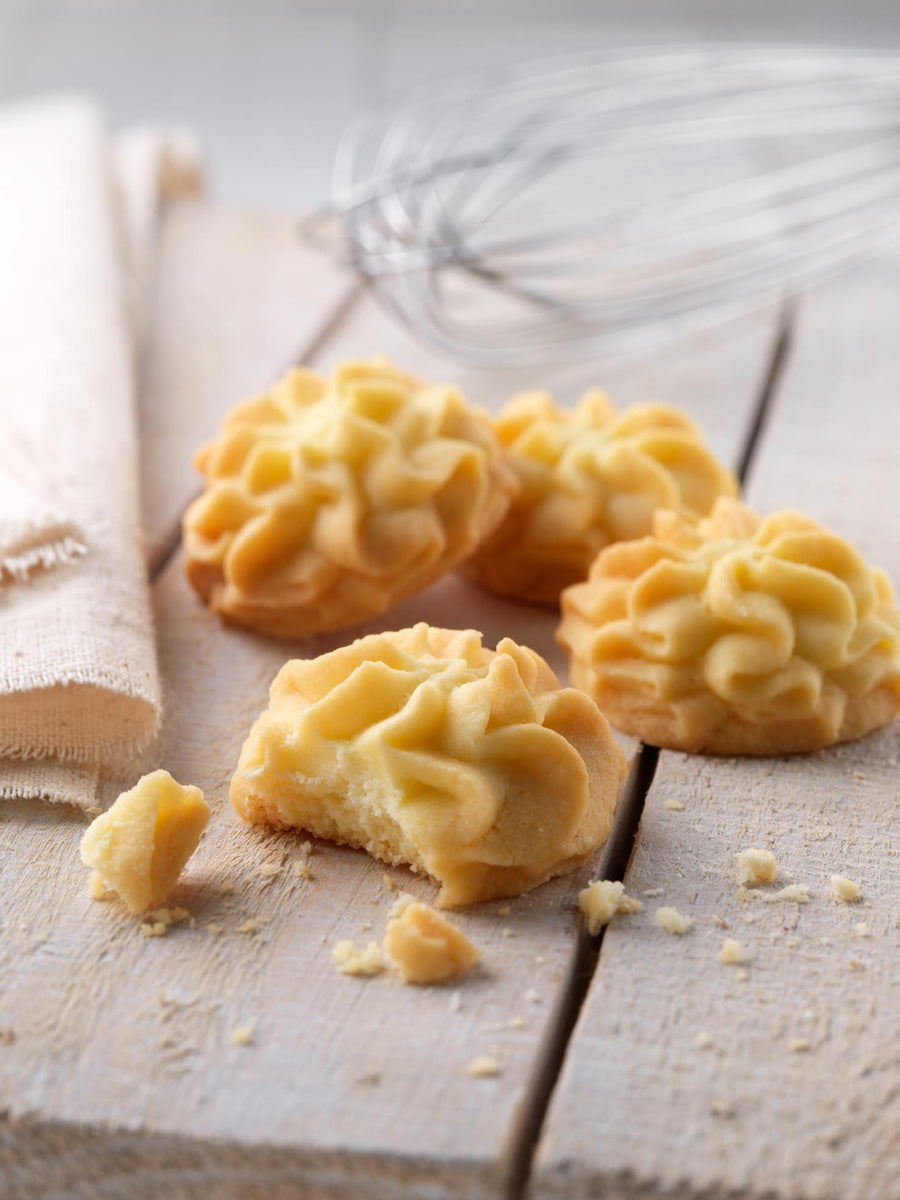
What is butter?
Butter is a dairy product made by churning cream. Churning disrupts the membranes around fat droplets in the cream, allowing the fat to gather into butter grains while a liquid portion separates. The butter grains are then worked into the smooth, semi-solid product used for spreading, cooking and baking.
Butter is not pure fat. A typical commercial butter contains roughly 80–82% milk fat, with most of the remainder made up of water and small amounts of milk solids. Exact composition varies by product and local standards, so the packaging is the best source for a particular butter.
That balance matters in baking. The fat contributes richness and tenderness, the water can produce steam and interact with flour, and the milk solids contribute flavour and browning.
How is butter made?
The details differ among manufacturers, but modern butter production generally follows these stages:
- Cream separation: cream is separated from milk.
- Preparation: the cream is cooled, pasteurised and prepared for churning. For cultured butter, selected cultures are used during a controlled flavour-development stage.
- Churning: agitation causes milk fat to gather into butter grains and separate from the liquid buttermilk.
- Draining and working: the buttermilk is removed and the butter is worked to distribute moisture evenly and create a consistent texture.
- Salting, if required: salt may be added for flavour and, historically, preservation.
- Shaping and packing: the finished butter is formed and packaged under controlled conditions.
Some artisan butter is made in small churns, but most butter sold today—including butter produced in New Zealand—is made with modern dairy equipment. It would be inaccurate to describe New Zealand butter in general as being hand-churned in wooden churns.
What is the difference between salted and unsalted butter?
Salted butter contains added salt. It is convenient for spreading and general cooking, but the amount of salt varies by brand.
Unsalted butter contains no added salt. Bakers often prefer it because it gives them direct control over the salt in a recipe. It can also make it easier to compare the underlying dairy flavour of different butters.
Neither is universally better. Follow the recipe where possible. If substituting salted butter for unsalted butter, remember that the final salt level may change.
Sweet-cream butter and cultured butter
Sweet-cream butter is made from fresh cream without a separate culturing stage for flavour. It normally has a clean, mild and familiar dairy taste.
Cultured butter is made using selected bacterial cultures to develop flavour in the cream or butter-making process. Depending on the product, it may taste fuller, more rounded, gently tangy or slightly nutty. “Cultured” does not mean that the butter must taste strongly sour.
| Feature | Sweet-cream butter | Cultured butter |
|---|---|---|
| Cream treatment | No separate culturing stage for flavour | Selected cultures are used to develop flavour |
| Typical flavour | Clean, creamy and mild | Fuller and more complex; sometimes gently tangy |
| Best use | Versatile for cooking and baking | Useful when butter flavour is intended to stand out |
| Is it automatically better? | No. The right choice depends on the recipe, desired flavour and production method. | |
For a more focused comparison, read Cultured Butter vs Regular Butter: What’s the Difference in Cookies?
Is cultured butter the same as grass-fed butter?
No. The two terms describe different aspects of butter:
- Cultured describes a production step used to develop flavour.
- Grass-fed describes how the cows were fed, although the precise meaning and certification requirements can vary by country and producer.
A butter can be cultured without being labelled grass-fed, grass-fed without being cultured, both, or neither. One term should not be used as proof of the other.
Is European-style butter the same as cultured butter?
Not necessarily. “European-style” often refers to butter with a comparatively high fat percentage or a particular production style, but the term is not used identically by every manufacturer or in every market.
Some European-style butters are cultured, but others may not be. If fat percentage or culturing matters for a recipe, check the label or the manufacturer’s specification rather than relying on the front-of-pack description alone.
How butter affects baking
Butter does several jobs at once. Its effect cannot be reduced to flavour alone.
Flavour and aroma
Butter supplies dairy aroma and richness. In a simple butter cookie, these qualities are easier to notice because there are fewer strong flavours competing with them.
Tenderness
Fat coats some of the flour particles and can limit how readily flour proteins hydrate and form gluten. This can help create a shorter, more tender texture. The result still depends on the amount of butter and the full balance of flour, starch, sugar and liquid.
Spread and shape
Butter softens and melts as dough heats. Its temperature before baking, the recipe’s fat-to-flour balance and the oven conditions can all influence how much a cookie spreads.
Browning
Butter contains small amounts of milk solids that contribute flavour and colour as baked goods brown. Baking temperature, sugar and time also affect the final colour.
Texture after cooling
As butterfat cools and firms, it helps set the structure of the finished bake. A butter-rich cookie may feel more delicate at oven temperature and become more stable as it cools.
Butter alone does not guarantee a melt-in-the-mouth cookie. Flour type, starch, sugar, mixing, shaping, moisture loss and baking time all matter. Read more in What Does Butter Do in Shortbread?
Does butter’s colour tell you its quality?
Butter may range from pale cream to yellow. Colour can be influenced by the cow’s diet, seasonal conditions, breed and the butter-making process. A deeper yellow is not, by itself, proof that one butter is better, more nutritious or more suitable for baking.
For consistent results, pay more attention to the butter’s intended use, fat and salt information, flavour, freshness and how it behaves in the recipe.
How to soften butter safely for baking
“Softened butter” normally means butter that is pliable but still cool. It should accept a light finger impression without looking melted or oily.
- Cut the required butter into smaller pieces so it softens more evenly.
- Leave it covered at room temperature only for the time needed.
- Avoid melting it unless the recipe specifically asks for melted butter.
- If the kitchen is warm, check it frequently. Over-softened butter can change aeration, spreading and texture.
Microwaving can create melted patches while the centre remains cold. If you use a microwave, choose very short, low-power intervals and turn the butter between them.
How to store butter
Follow the storage directions and use-by or best-before information on the package. In general:
- keep butter well wrapped so it is protected from air and strong refrigerator odours;
- store it at the temperature stated by the manufacturer;
- use clean utensils to avoid introducing crumbs or other food;
- freeze only if the packaging or manufacturer’s guidance allows it; and
- discard butter that shows obvious spoilage or an unpleasant rancid smell.
Salted and unsalted butters may have different keeping qualities, but packaging and handling also matter. The label remains the most useful guide for the product you have purchased.
How to read a butter label
A useful comparison starts with the complete label rather than a single marketing word. Check:
- whether the product is salted or unsalted;
- the ingredient list;
- milk-fat percentage, when shown;
- nutrition information and serving size;
- allergen statements;
- country-of-origin wording;
- storage instructions; and
- whether claims such as cultured, organic or grass-fed are defined or certified.
Terms such as “natural”, “premium” and “traditional” do not tell you everything about composition or suitability. For dietary decisions, use the specific nutrition and ingredient information supplied for that product.
Is butter healthy?
Butter is an energy-dense food and a source of saturated fat. It should not be promoted as a treatment for inflammation, diabetes, digestive conditions, weight management or cardiovascular disease. Equally, one ingredient does not determine the quality of an entire diet.
Individual needs differ. People who are managing cholesterol, cardiovascular risk, allergies or another medical condition should follow advice from an appropriate health professional. For general guidance, consult recognised public-health resources and the nutrition information on the product rather than relying on broad claims about butter being either a “superfood” or a food that must always be avoided.
Useful background is available from New Zealand’s Eating and Activity Guidelines. Technical information about butter composition and production is also available from the University of Wisconsin–Madison Center for Dairy Research.
Why Lowrey uses New Zealand cultured butter
Lowrey chooses New Zealand cultured butter primarily for flavour. Its fuller dairy aroma suits a cookie designed to place butter at the centre of the eating experience.
Lowrey Original Butter Cookies contain approximately 42–44% New Zealand cultured butter. The Original recipe is made with cultured butter, wheat flour, maize starch, icing sugar and salt. Other Lowrey flavours include different flavour ingredients and have their own formulas, so the Original butter percentage should not be applied to every variety.
The finished cookies are fine-crumbed, fragile and melt in the mouth rather than hard or strongly crunchy. This texture comes from the complete recipe and production process; it cannot be attributed to cultured butter alone.

Explore the Lowrey Butter Cookies collection or see the Original Butter Cookies gift tin.
Frequently asked questions
What is butter made from?
Butter is made by churning cream so that the milk fat gathers and separates from the liquid buttermilk. Commercial butter typically contains about 80–82% milk fat, with water and small amounts of milk solids making up most of the remainder.
What is the difference between salted and unsalted butter?
Salted butter contains added salt, while unsalted butter does not. Unsalted butter gives bakers more direct control over a recipe’s salt level, but either type can work when the recipe and adjustment are appropriate.
What is cultured butter?
Cultured butter is made using selected bacterial cultures to develop flavour in the cream or butter-making process. It often has a fuller, more complex dairy character than mild sweet-cream butter.
Is grass-fed butter the same as cultured butter?
No. “Grass-fed” refers to how cows were fed, while “cultured” refers to a flavour-development step in butter production. A butter may be one, both or neither.
Does cultured butter contain probiotics after baking?
Butter cookies should not be promoted as probiotic foods merely because cultured butter was used. The cultures are used to develop flavour, and baking exposes the dough to high temperatures. Choose cultured butter cookies for their flavour, not an assumed probiotic benefit.
Does cultured butter automatically make better cookies?
No. Cultured butter can add a deeper dairy flavour, but cookie quality and texture depend on the complete recipe, ingredient proportions, mixing, shaping and baking.
How much cultured butter is in Lowrey Original Butter Cookies?
Lowrey Original Butter Cookies contain approximately 42–44% New Zealand cultured butter. Other flavours have different formulas, so that figure should not be applied across the full range.
Final thoughts
Butter is simple in its basic ingredients but complex in the way it behaves. Salt level, fat and moisture, culturing, temperature and the rest of a recipe all influence the result.
For baking, the best butter is not determined by one fashionable label. It is the butter whose flavour, composition and handling suit the recipe. For Lowrey Original Butter Cookies, New Zealand cultured butter is chosen for its rich dairy character, while the cookies’ delicate texture comes from the balance of the entire formula.

