

Why are your butter cookies thin and crispy instead of tender and melt-in-the-mouth? Usually, the dough spreads because the fat melts before the cookie has developed enough structure to hold its shape. Butter temperature, ingredient balance, dough temperature, the baking tray and oven conditions can all contribute.
Quick answer: Start by checking whether the butter was too warm, the flour was under-measured, the dough became warm before baking, the tray was hot or greased, or the oven ran cooler than expected. Thin cookies also lose moisture faster, so they often become crisper even when crispness was not the original problem.
There is no single butter-cookie formula and no universal flour-to-butter ratio that guarantees the same result in every kitchen. Sugar type, starch, mixing method, cookie size and the recipe’s use of egg or raising agents can also change spread and texture. The most reliable approach is to follow a tested recipe by weight, then change only one variable at a time.
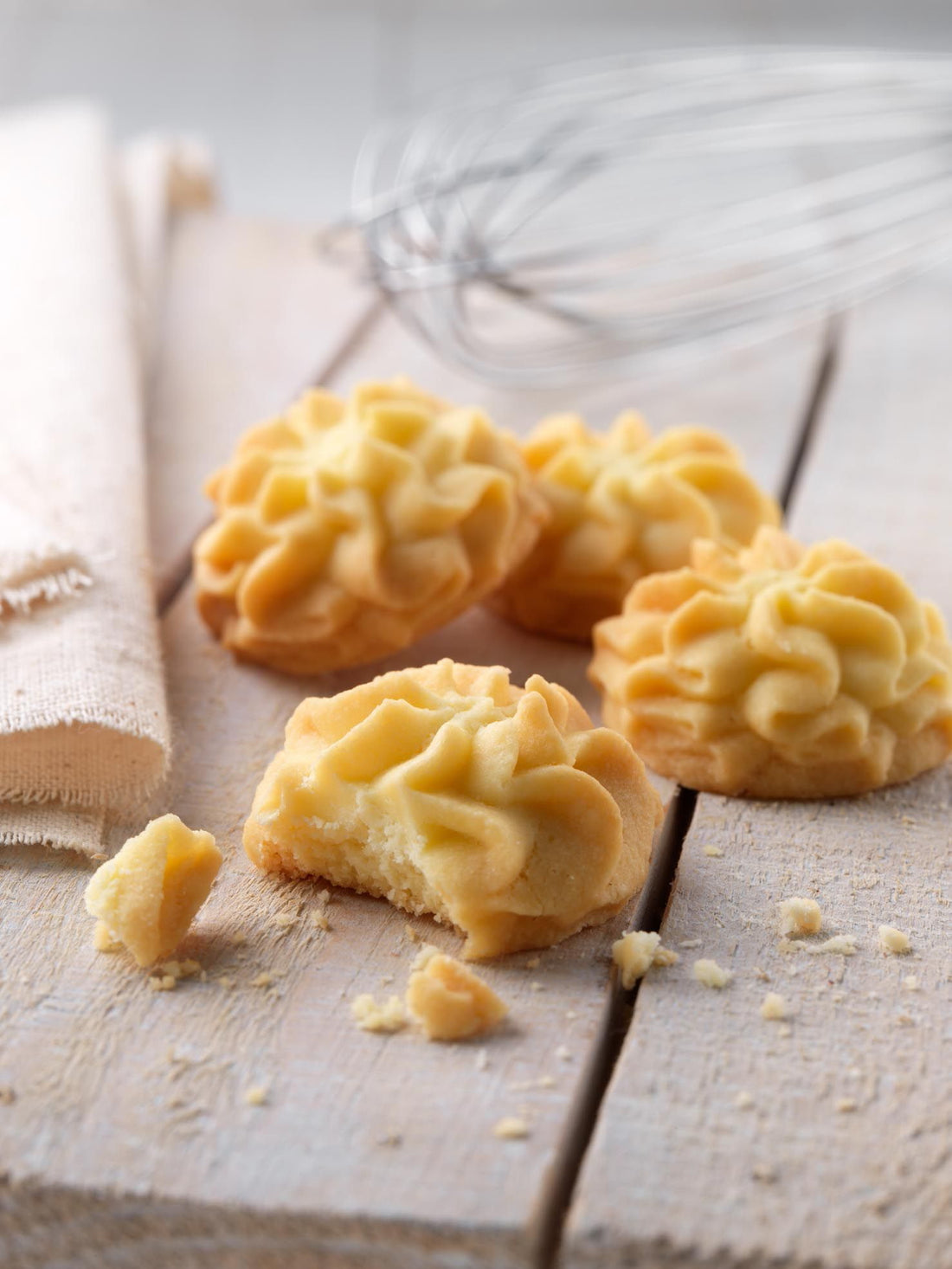
Why Do Butter Cookies Spread?
As cookie dough heats, butter softens and melts. The dough begins to flow, sugar dissolves and moisture starts to evaporate. At the same time, flour starches absorb moisture and set, while proteins help form the cookie’s structure.
If the dough flows too much before that structure sets, the cookie spreads. A warm, soft dough may spread rapidly; a dough with too little flour may not have enough structure; and an oven that is cooler than expected may give the fat more time to melt before the cookie sets.
Spread itself is not always a fault. Some recipes are intentionally designed for a thin, crisp butter cookie. It becomes a problem when the result does not match the recipe or the texture you wanted.
Butter Cookie Troubleshooting Table
| What you see | Possible causes | What to try next |
|---|---|---|
| Cookies spread into very thin discs | Butter or dough too warm; flour under-measured; tray hot or greased; oven too cool | Weigh ingredients, cool the dough, use a cool lined tray and check oven temperature |
| Edges spread but the centre stays thick | Uneven portions; warm exterior; inconsistent piping or shaping | Make even portions and chill the shaped cookies consistently |
| Shape disappears during baking | Dough too soft; butter partly melted; insufficient structure for a detailed shape | Cool shaped dough and use a recipe developed for piping or detailed shapes |
| Cookies are hard or very crisp | Overbaking; cookies too thin; too much flour; dough overmixed after flour was added | Bake a little less, keep portions even and avoid adding unmeasured extra flour |
| Cookies feel greasy | Warm or separated butter; ingredient imbalance; dough insufficiently mixed or cooled | Use softened—not oily— butter and follow the recipe weights and method closely |
| Cookies barely spread and feel dry | Too much flour; dough too cold for the formula; portions too thick; overbaking | Check flour weight and follow the recipe’s shaping, chilling and baking instructions |
These are diagnostic clues, not universal rules. The same symptom can have more than one cause, so compare the failed batch with the recipe and your actual process before changing the formula.
1. The Butter Was Too Warm or Melted
Softened butter should be pliable enough to mix but should not look glossy, oily or partly liquid. When butter becomes too warm, its crystal structure changes and the dough may lose strength before it reaches the oven. Melted butter also behaves differently from softened butter because it changes aeration and how the flour is hydrated.
Room temperature is not a precise instruction: a kitchen in summer can be much warmer than one in winter. Use the butter’s condition as your guide. If it looks oily or the dough feels slack, cool it before shaping or baking. Do not substitute melted butter unless the recipe was specifically developed for it.
2. The Flour Was Under-Measured—or Extra Flour Was Added
Flour helps create the structure that holds a cookie together. Too little can allow excessive spread, while too much can make the cookie dry, firm or floury. This is why a universal instruction such as “use 130–140 grams of flour for every 100 grams of butter” is unreliable: different recipes also contain different sugars, starches, liquids and flavour ingredients.
Weighing flour is usually more consistent than measuring it by volume. If you use cups, avoid packing the flour into the cup. Also resist repeatedly dusting a soft dough with extra flour, because that can solve stickiness while creating a dense or dry cookie.
3. The Sugar Amount or Type Changed
Sugar does more than add sweetness. It affects moisture, browning, spread and the way the cookie sets. Granulated sugar, caster sugar and icing sugar do not always behave identically, and some icing sugars contain a small amount of starch.
More sugar can encourage spreading and can produce a crisper result after moisture leaves the cookie. Reducing sugar without testing can also change tenderness, colour and structure. Use the sugar named in the recipe and weigh it accurately rather than treating different sugars as automatic one-for-one substitutes.
4. The Dough Was Too Warm Before Baking
Even if the butter began at a suitable temperature, mixing, handling, piping and a warm room can raise the dough temperature. Chilling can help the fat firm again and may preserve a piped or cut shape for longer in the oven.
However, chilling is not a universal cure. A recipe designed to be baked immediately may become too firm when heavily chilled, while a poorly balanced formula may still spread after chilling. Follow the recipe first. If your first test cookie spreads too much, cooling the remaining shaped dough is a sensible controlled adjustment.
5. The Baking Tray Was Hot, Dark or Heavily Greased
Placing dough on a tray that is still hot from a previous batch starts melting the butter before the cookies enter the oven. Allow trays to cool fully between batches.
A heavily greased surface can encourage spreading because the dough has less grip. Use the tray preparation specified by the recipe—often baking paper or a suitable reusable liner—rather than adding extra grease without a reason.
Tray colour and material also affect heat transfer. Dark trays can brown the bottoms faster than light-coloured trays, and changing trays between batches can change the result even when the oven setting stays the same.
6. The Oven Temperature or Baking Time Was Wrong
If the oven is cooler than the setting suggests, the butter may melt and the dough may spread before enough structure sets. If the cookies bake for too long, they lose more moisture and become crisper or harder.
An oven that is too hot can create dark edges or bottoms before the centre is properly baked. Home ovens commonly cycle above and below their set temperature, and hot spots can create uneven batches. Preheat fully, bake a small test portion and consider an independent oven thermometer if results repeatedly differ from the recipe.
7. Cookie Size, Thickness and Spacing Were Inconsistent
Small or thin cookies bake and dry more quickly than larger, thicker portions. Uneven portions may therefore produce a tray with both pale, tender cookies and thin, crisp ones.
Use a scale, scoop, cutter or consistent piping count to keep portions similar. Leave enough room between cookies for the expected spread, and bake similar sizes together. If a recipe gives a thickness or piping size, treat it as part of the formula rather than merely a presentation choice.
Do Raising Agents, Eggs or Added Liquid Affect Spread?
They can. Some butter-cookie recipes contain no raising agent or egg, while others include one or both. Too much baking soda can increase spreading and browning in recipes that use it. Egg, milk and other liquids change hydration, protein structure and steam formation.
Do not remove or add these ingredients based on a general troubleshooting list. Their effect depends on the complete recipe. If you changed the quantity or size of the egg, used a different raising agent or added liquid to make piping easier, return to the tested recipe before changing anything else.
What Does Corn Starch Do in Butter Cookies?
Corn starch can dilute the gluten-forming proteins in wheat flour and contribute to a finer, more tender, more fragile crumb. This is useful when the target is a delicate, melt-in-the-mouth cookie rather than a chewy one.
Corn starch does not automatically prevent spreading, and more is not always better. The result still depends on the balance of butter, flour, starch, sugar and moisture. Too much starch for a particular recipe can create a dry, powdery or weak texture.
For a deeper explanation of fat and structure, read what butter does in shortbread.
Thin and Crisp vs Delicate and Melt-in-the-Mouth
“Fragile” and “crisp” are not the same description. A thin cookie may snap sharply and feel dry or crunchy. A melt-in-the-mouth cookie can also break very easily, but its fine structure softens and disperses quickly rather than requiring a hard bite.
| Texture | Typical experience | What may contribute |
|---|---|---|
| Thin and crisp | Flatter shape, sharper snap and more surface browning | Greater spread, thinner portions, sugar behaviour and longer moisture loss |
| Tender and crumbly | Breaks with little resistance and has a soft, short crumb | Balanced fat and flour, limited gluten development and controlled baking |
| Very delicate and melt-in-the-mouth | Extremely fragile, fine-textured and softens rapidly in the mouth | Complete recipe balance, fine sugar or starch, careful mixing, shaping and baking |
One style is not automatically better than another. The important question is whether the recipe produced its intended texture. Learn more in our guide to melt-in-the-mouth cookies.
A Step-by-Step Fix for Your Next Batch
- Return to the tested recipe. Undo unplanned substitutions and confirm whether ingredient weights include or exclude shells, packaging or toppings.
- Weigh the ingredients. Pay particular attention to butter, flour, starch and sugar.
- Check the butter. It should match the recipe’s instruction and should not be oily or partly melted unless melted butter is specifically required.
- Keep portions consistent. Use the same size and thickness so the test is meaningful.
- Use a cool, correctly prepared tray. Do not place dough on a hot tray or add extra grease unnecessarily.
- Bake one test cookie. If it spreads excessively, cool the remaining shaped dough before testing again.
- Change one variable at a time. Record the dough temperature, chilling time, tray, oven setting and baking time so you know what actually helped.
If the test cookie still spreads, check the oven with a thermometer before adding more flour. Adding flour can reduce spread, but it also changes flavour and tenderness and may hide a temperature problem.

How Lowrey’s Intended Texture Is Different
Lowrey Butter Cookies are handcrafted in small batches in New Zealand. Their intended texture is fine, very fragile and melt-in-the-mouth rather than hard, crunchy or thin and shattery.
The current Original recipe contains 42% New Zealand cultured butter and combines cultured butter with flour, corn starch and icing sugar. These ingredients work together with mixing, piping and baking to create the finished shape and texture. The six Lowrey flavours have their own formulations, so the Original recipe and butter percentage should not be treated as a universal formula for the whole range.
This deliberate fragility is part of the eating experience, although it also means that some breakage can occur during handling or long-distance delivery. It is different from a homemade cookie accidentally spreading into a thin, overbaked disc.
Prefer a Delicate, Melt-in-the-Mouth Butter Cookie?
Explore six Lowrey flavours, handcrafted in New Zealand and presented in red steel gift tins.
Frequently Asked Questions
Why do my butter cookies spread so much?
Common causes include butter or dough that is too warm, under-measured flour, a hot or heavily greased tray, and an oven that runs cooler than expected. Ingredient substitutions and inconsistent cookie size can also contribute.
Can I use melted butter for butter cookies?
Only when the recipe specifically calls for it. Melted butter changes aeration, flour hydration and spread, so it is not an automatic substitute for softened butter.
Should I chill butter-cookie dough before baking?
Chilling can firm the butter and help shaped dough retain detail, but it is not required by every recipe. Follow the tested method first. If a test cookie spreads too much, chilling the remaining shaped dough is a useful controlled adjustment.
Does too much sugar make butter cookies spread?
It can. Sugar affects moisture, spread, browning and crispness. The type of sugar also matters, so weigh the amount and use the variety specified by the recipe.
Why are my butter cookies hard or too crispy?
They may have spread too thin, baked too long, contained too much flour or been overmixed after the flour was added. Thin cookies lose moisture faster and generally become crisper than thicker cookies.
Does corn starch stop butter cookies from spreading?
Not by itself. Corn starch can help create a finer, more tender and fragile crumb, but spread still depends on the full balance of fat, flour, starch, sugar and moisture as well as dough and oven conditions.
Are Lowrey Butter Cookies crispy?
Lowrey Butter Cookies are designed to be delicate, very fragile and melt-in-the-mouth rather than hard or crunchy. That intentional fragility is different from a cookie that has accidentally spread too thin or overbaked.
Fix the Process, Not Just the Flour
When butter cookies spread and turn thin or overly crisp, it is tempting to add more flour immediately. A better first step is to check the butter, dough temperature, ingredient weights, tray and oven. These variables often explain the problem without changing the intended flavour and tenderness of the recipe.
Once you know the target texture—thin and crisp, tender and crumbly, or very delicate and melt-in-the-mouth—you can judge the result more accurately. Good troubleshooting is not about forcing every butter cookie into the same style. It is about making the recipe behave as intended.

