

Butter is mainly made from milk fat and water, with small amounts of milk proteins, lactose and minerals. It is usually produced by separating cream from milk and churning the cream until the fat gathers into solid butter.
Although butter has a relatively simple basic composition, its flavour and baking performance can vary. The type of cream, fat content, salt level, production method and whether the cream has been cultured can all affect the finished butter.

What Is Butter Made From?
Butter begins with milk, but it is normally made from the cream separated from that milk. Cream contains a much higher concentration of milk fat than whole milk, making it more suitable for churning into butter.
Standard butter generally contains:
- Approximately 80% or more milk fat, depending on the product and local food standards
- Water
- Small amounts of milk proteins
- Small amounts of lactose and minerals
- Salt, when making salted butter
Butter is therefore not entirely fat. Its water and milk-solid content also affect the way it melts, browns and behaves in cooking and baking.
Is Butter Made from Milk or Cream?
Both answers are understandable, but cream is the more precise answer. Cream comes from milk, and butter is normally made by churning that cream.
Butter can be made starting with whole milk, but the cream must first be separated or allowed to rise. Commercial butter production normally begins with separated cream because it contains enough concentrated milk fat to make the process more efficient.
How Is Butter Made?
The basic butter-making process is straightforward, although commercial production requires careful control of temperature, hygiene, moisture and consistency.
- Cream is separated from milk. The higher-fat cream is collected for butter production.
- The cream is pasteurised. Commercial cream is normally heat-treated for food safety.
- The cream may be cultured. For cultured butter, selected cultures are introduced before churning to develop a fuller dairy flavour.
- The cream is churned. Churning disrupts the membranes around the fat droplets, allowing the milk fat to gather together.
- The liquid is drained. The solid butter separates from a liquid traditionally known as buttermilk.
- The butter is worked. It is pressed or kneaded to distribute moisture evenly and create a consistent texture.
- Salt may be added. Salted butter contains added salt, while unsalted butter does not have salt intentionally added during production.
What Are Milk Solids in Butter?
Milk solids are the small non-fat components that remain in butter after cream has been separated and churned. They can include milk proteins, lactose and minerals.
These components are present in much smaller amounts than milk fat and water, but they still matter. Milk solids contribute flavour and can brown when butter is heated.
This browning is one reason heated butter can develop a toasted or nutty aroma. When butter is clarified, most of its water and milk solids are removed, leaving a product made almost entirely from milk fat.
Common Types of Butter
Unsalted Butter
Unsalted butter is produced without intentionally adding salt. Bakers often use it because it allows the amount of salt in a recipe to be controlled separately.
“Unsalted” does not necessarily mean absolutely sodium-free. Milk naturally contains very small amounts of sodium.
Salted Butter
Salted butter has salt added during production. It is commonly used as a table butter and in everyday cooking.
The amount of salt can vary between products, so salted butter may be less predictable in recipes where the salt level must be measured precisely.
Sweet-Cream Butter
Sweet-cream butter is made from fresh cream that has not been intentionally cultured before churning. It normally has a clean and mild dairy flavour.
The word “sweet” does not mean that sugar has been added. It distinguishes fresh, uncultured cream from cultured or fermented cream.
Cultured Butter
Cultured butter is made from cream that has been cultured before churning. This process generally creates a fuller dairy aroma and a slightly more developed flavour.
Cultured butter and grass-fed butter are not the same thing. “Cultured” describes how the cream is treated, while “grass-fed” describes the cows’ feeding system.
For a more detailed explanation, read Cultured Butter vs Regular Butter.
Clarified Butter and Ghee
Clarified butter is made by heating butter and removing most of the water and milk solids. The remaining product contains a much higher proportion of milk fat.
Ghee is related to clarified butter but is normally heated for longer, allowing the milk solids to develop a more noticeable cooked or nutty aroma before they are removed.
Is Grass-Fed Butter a Different Type of Butter?
Grass-fed describes the feeding and pasture system used for dairy cows. It does not explain whether the cream was cultured, whether the butter contains salt or how it was churned.
A butter could be both grass-fed and cultured, grass-fed and sweet-cream, or neither. These terms refer to different parts of dairy production and should not be treated as interchangeable.
New Zealand-made butter is also not automatically certified grass-fed. Certification or supplier documentation is needed before a specific grass-fed claim can be made.
Read the grass-fed versus grain-fed butter guide for a fuller comparison.
How Is Butter Different from Margarine?
Butter is a dairy product whose main fat comes from milk or cream. Margarine is a separate emulsified spread that is commonly made from vegetable oils or other fats.
The ingredients in margarine vary between products. It should not automatically be described as preservative-filled, completely plant-based or dairy-free without checking the individual label.
Butter and margarine can also behave differently in baking because their fat composition, water content and melting characteristics may not be the same.
Why Is Butter Used in Baking?
Butter affects both the flavour and structure of baked food. It contributes dairy aroma, carries flavour and influences how flour, sugar and water interact.
In cakes, pastries and cookies, butter can affect:
- Dairy aroma and richness
- Dough spread
- Tenderness and shortness
- Surface browning
- Flavour release
- How the finished product breaks apart in the mouth
Butter does not determine the final texture by itself. Flour, starch, sugar, moisture, mixing, shaping and baking conditions also play important roles.
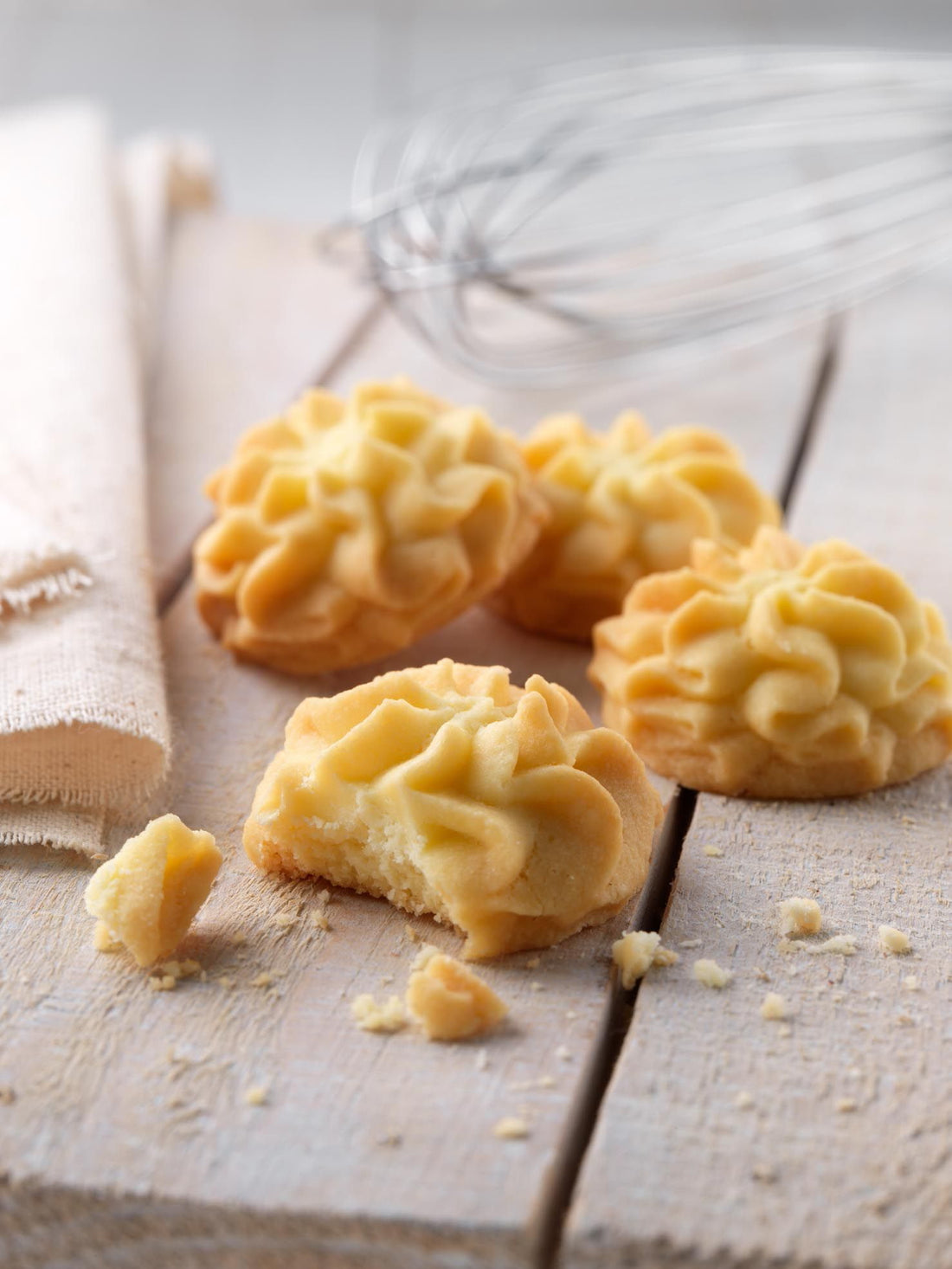
Why Does Butter Matter in Butter Cookies?
In a strongly flavoured cookie, ingredients such as cocoa, coffee, spices, fruit or nuts may dominate the finished flavour. In a classic butter cookie, the butter is much easier to notice.
Butter contributes the dairy aroma and richness associated with butter cookies. However, the final texture also depends on the full recipe rather than the butter alone.
A delicate, short and melt-in-the-mouth butter cookie requires a careful balance of fat, flour, starch, sugar, moisture and baking conditions. A high butter percentage does not automatically guarantee the same texture in every cookie recipe.
What Butter Does Lowrey Use?
Lowrey Butter Cookies are made in New Zealand with New Zealand cultured butter. Butter content varies by flavour: Original contains 42% butter, Coffee 44%, Raspberry 41% and Black Sesame 36%. Other flavours have their own formulations, so check the relevant product page for current details.
The cultured butter contributes rich dairy aroma and flavour, while the complete recipe creates Lowrey’s delicate, short and melt-in-the-mouth texture.
Lowrey Original Butter Cookies are made with four main ingredients:
- New Zealand cultured butter
- Wheat flour
- Corn starch
- Icing sugar
The Original recipe is egg-free and has no added salt. Other Lowrey flavours contain additional flavour ingredients, so the four-main-ingredient description applies specifically to Original.
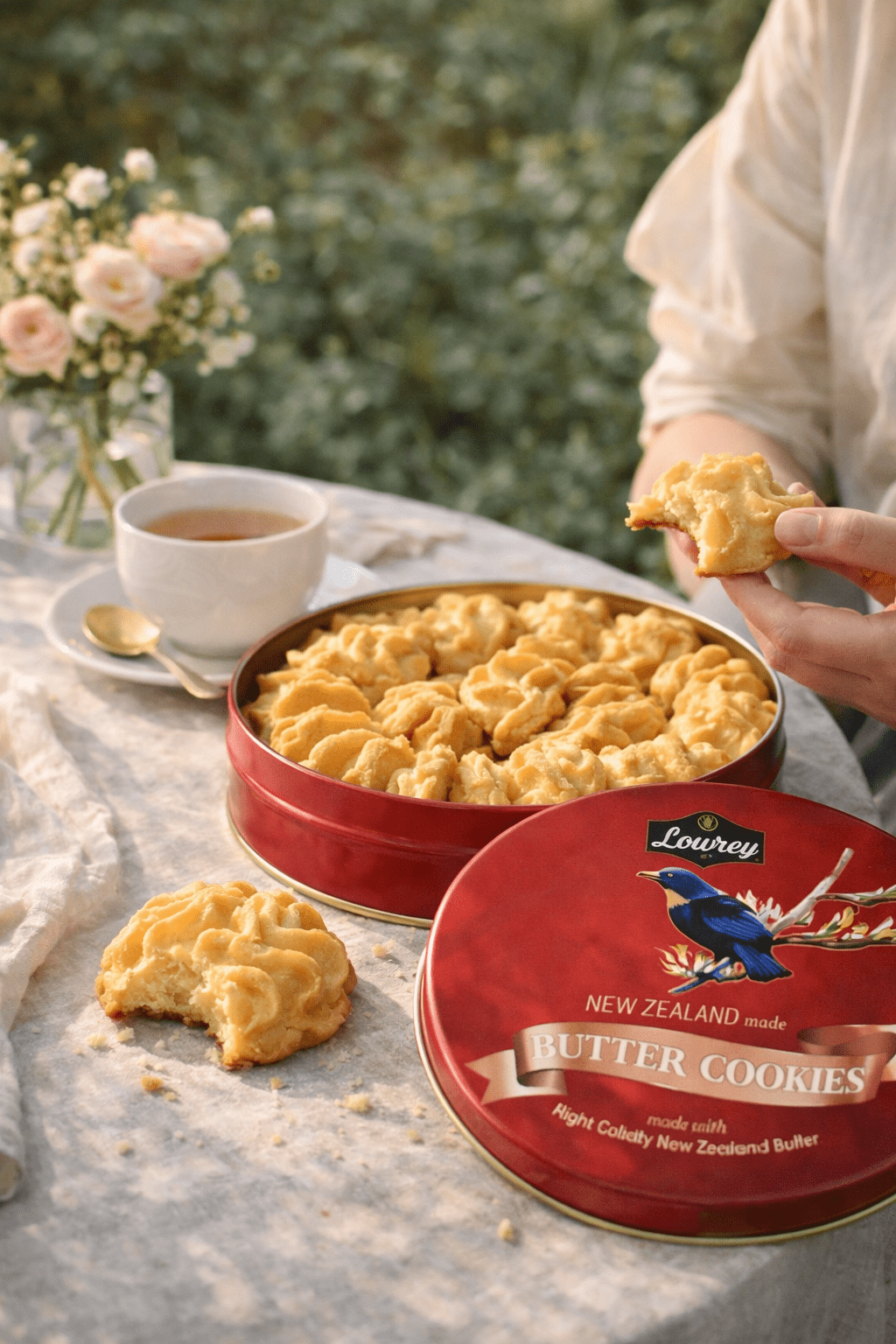
Lowrey Butter Cookies are packed in red metal gift tins with tight-fitting lids. Each tin contains one flavour only rather than a mixture of different flavours.
Explore the Lowrey Original Butter Cookies gift tin or view all six single-flavour options in the Lowrey Butter Cookies collection.
Frequently Asked Questions
Is butter made entirely from fat?
No. Butter is mainly milk fat, but it also contains water and small amounts of milk proteins, lactose and minerals.
What ingredients are in butter?
Plain unsalted butter is mainly milk fat and water, with small amounts of naturally occurring milk proteins, lactose and minerals. Salt is added to salted butter. Some specialty or spreadable products may contain additional ingredients, so check the product label.
Is butter made from milk or cream?
Butter comes from milk, but cream is the more precise answer. Butter is normally made by separating cream from milk and then churning that cream until the milk fat gathers into solid butter.
Does butter contain lactose?
Butter normally contains a small amount of lactose because traces of milk solids remain. People with a milk allergy should treat butter as a dairy ingredient and check the relevant food label.
Is cultured butter the same as grass-fed butter?
No. Cultured butter refers to cream being cultured before churning. Grass-fed refers to the cows’ feeding and pasture system.
Does unsalted butter contain no sodium?
Unsalted butter has no salt intentionally added during production, but it may still contain a very small amount of naturally occurring sodium from milk.
Does butter alone make cookies melt in the mouth?
No. Butter contributes richness and tenderness, but melt-in-the-mouth texture also depends on flour, starch, sugar, moisture, mixing and baking conditions.
What butter is used in Lowrey Butter Cookies?
Lowrey Butter Cookies use New Zealand cultured butter. Butter content varies by flavour: Original contains 42% butter, Coffee 44%, Raspberry 41% and Black Sesame 36%. Other flavours have their own formulations.
Learn More About Butter Cookies
Understanding butter is one part of understanding a butter cookie. The ingredient list, butter proportion, recipe structure, texture, packaging and product information should all be considered together.
Read How to Identify Quality Butter Cookies or explore the Lowrey Butter Cookies collection.

